
Memorials & Heritage
Explore the life, leadership, and sacrifice of Rajashankar Shah, the courageous Gond ruler of Jabalpur who stood against British rule during the Revolt of 1857 and became a lasting symbol of tribal pride and resistance.
- Home
- Memorials & Heritage
Shaheed Smarak, Jabalpur
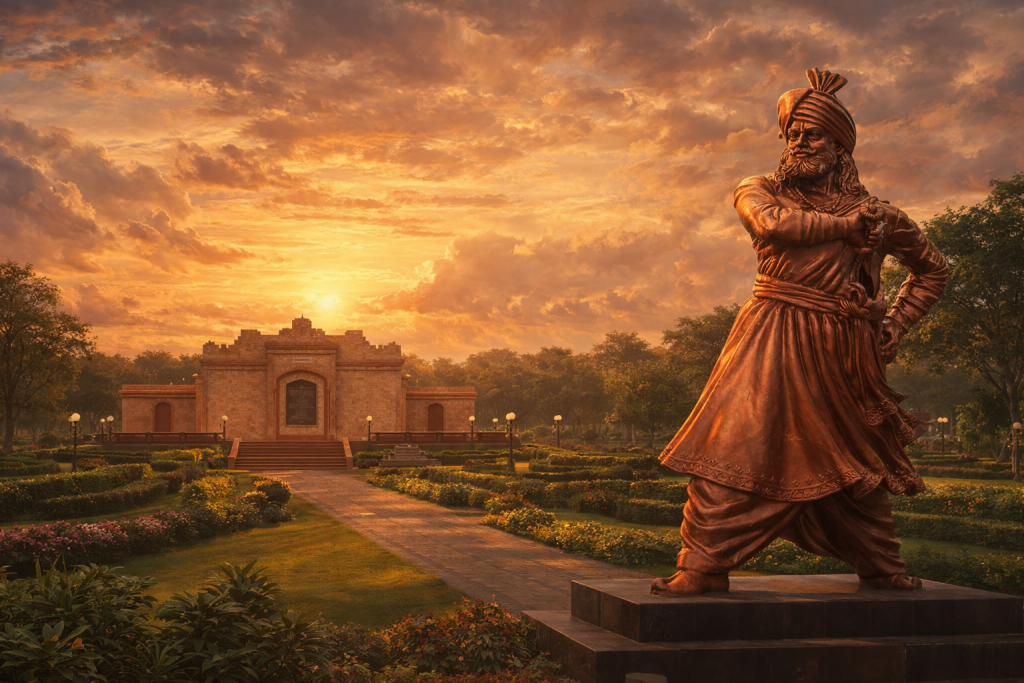
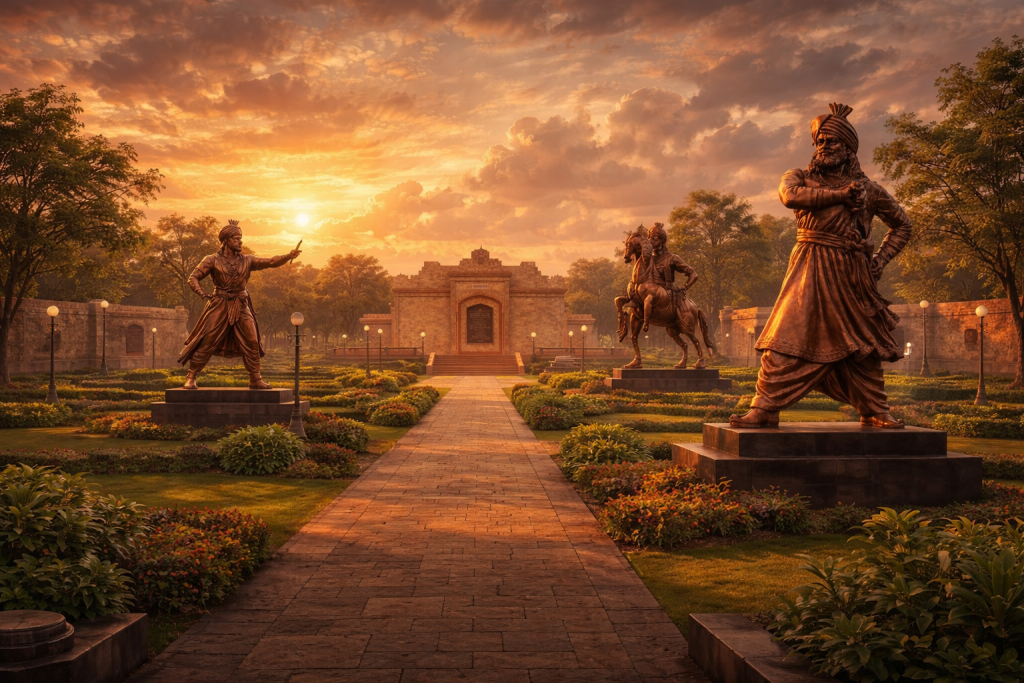
Shaheed Smarak stands as a solemn tribute to the martyrs of India’s freedom struggle, including Rajashankar Shah and his son Raghunath Shah. Located in Jabalpur, this memorial symbolizes sacrifice, courage, and resistance against British colonial rule. It serves not only as a historical landmark but also as a place of remembrance where citizens gather to honor the bravery of those who gave their lives for independence.
Statues & Local Memorials
Across Jabalpur and nearby regions of Madhya Pradesh, statues and local memorials dedicated to Rajashankar Shah serve as enduring symbols of honor and remembrance. These sculptures often portray him in a heroic stance, reflecting strength, dignity, and resistance against British rule. Installed in public squares, educational institutions, and heritage sites, they keep his legacy visible in everyday civic life.
Government Commemorations
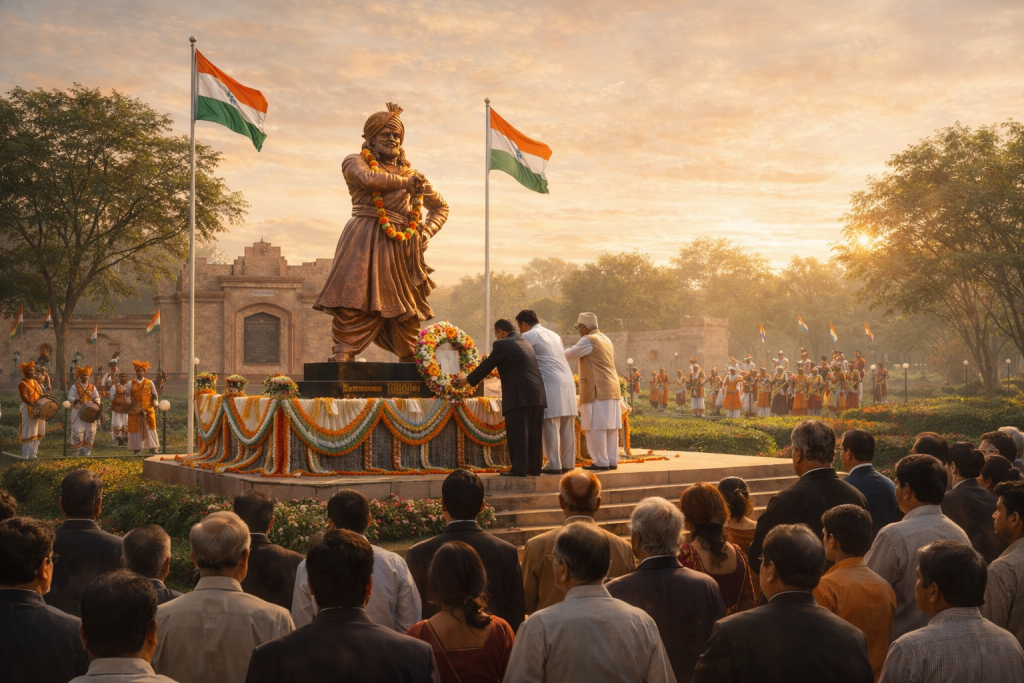
The Government of Madhya Pradesh and local administrative bodies periodically honor Rajashankar Shah through official ceremonies, tribute programs, and memorial events. On significant historical dates linked to the Revolt of 1857, floral tributes and public gatherings are organized to remember his sacrifice and reaffirm regional pride.
Educational institutions, cultural departments, and municipal authorities also participate in awareness initiatives, exhibitions, and heritage programs that highlight his contribution to India’s early freedom struggle.
Educational Recognition
Rajashankar Shah’s contribution to the Revolt of 1857 has increasingly found recognition within academic and educational discourse, particularly in regional history studies across Madhya Pradesh. Schools and colleges in Jabalpur and surrounding districts include references to his role in the uprising as part of lessons on tribal participation in India’s freedom struggle. His story helps broaden the narrative beyond mainstream figures and introduces students to the significant contributions of indigenous leaders. By integrating his life into textbooks, seminars, and cultural competitions, educational institutions foster awareness about local heritage and forgotten heroes. His martyrdom alongside his son is often discussed as a powerful example of sacrifice for sovereignty and dignity. Through debates, essay competitions, and annual commemorative programs, students engage with his legacy not merely as historical information but as inspiration. This academic inclusion ensures that younger generations understand the depth of tribal resistance in Central India and recognize that the freedom movement was shaped by diverse communities, including the Gond rulers who stood firmly against colonial domination.
Universities and research scholars have also begun to highlight Rajashankar Shah in studies focusing on tribal history, regional resistance movements, and the socio-political landscape of Central India during the nineteenth century. His role provides valuable insight into how smaller kingdoms and indigenous leaders responded to expanding British authority. Academic conferences and local history symposiums often examine his leadership as an example of moral courage combined with political awareness. By encouraging research papers and documentation projects centered on Gond heritage, institutions contribute to preserving authentic regional narratives.