Arrest & Martyrdom
Explore the life, leadership, and sacrifice of Rajashankar Shah, the courageous Gond ruler of Jabalpur who stood against British rule during the Revolt of 1857 and became a lasting symbol of tribal pride and resistance.
- Home
- Arrest & Martyrdom
Betrayal & Capture
The Betrayal
During the Revolt of 1857, Raja Shankar Shah and his son Raghunath Shah were quietly inspiring resistance against British rule in Jabalpur. Their patriotic influence began to alarm colonial authorities.
Arrest & Capture
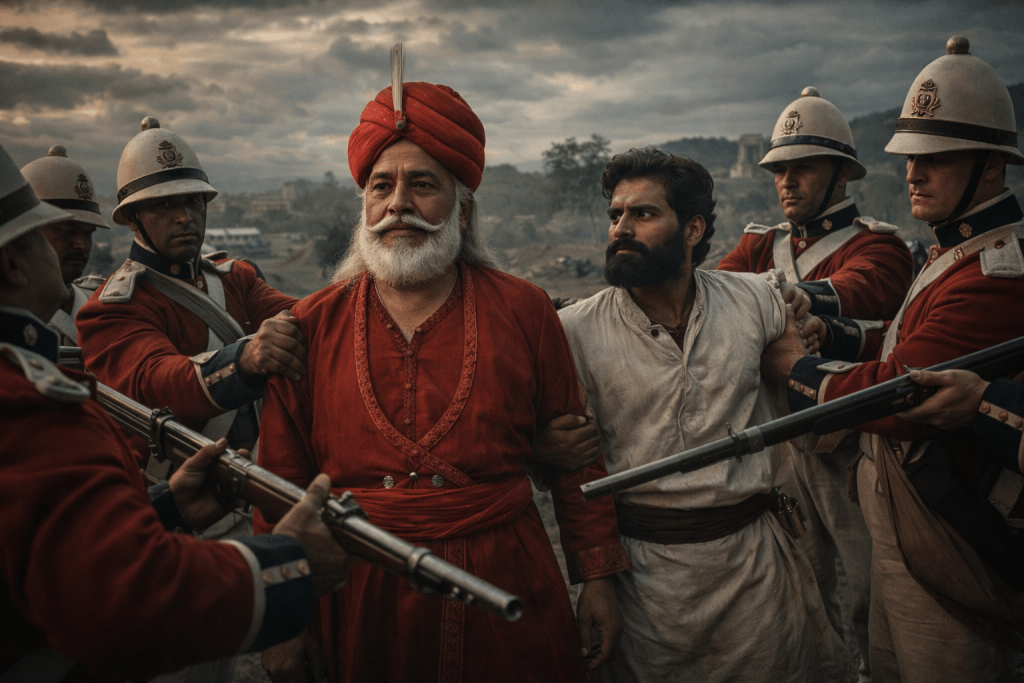
In September 1857, British forces detained Raja Shankar Shah and Raghunath Shah on charges of sedition and conspiracy. They were imprisoned under heavy security to prevent further rebellion.
Trial by British Authorities
1. Sedition Charges
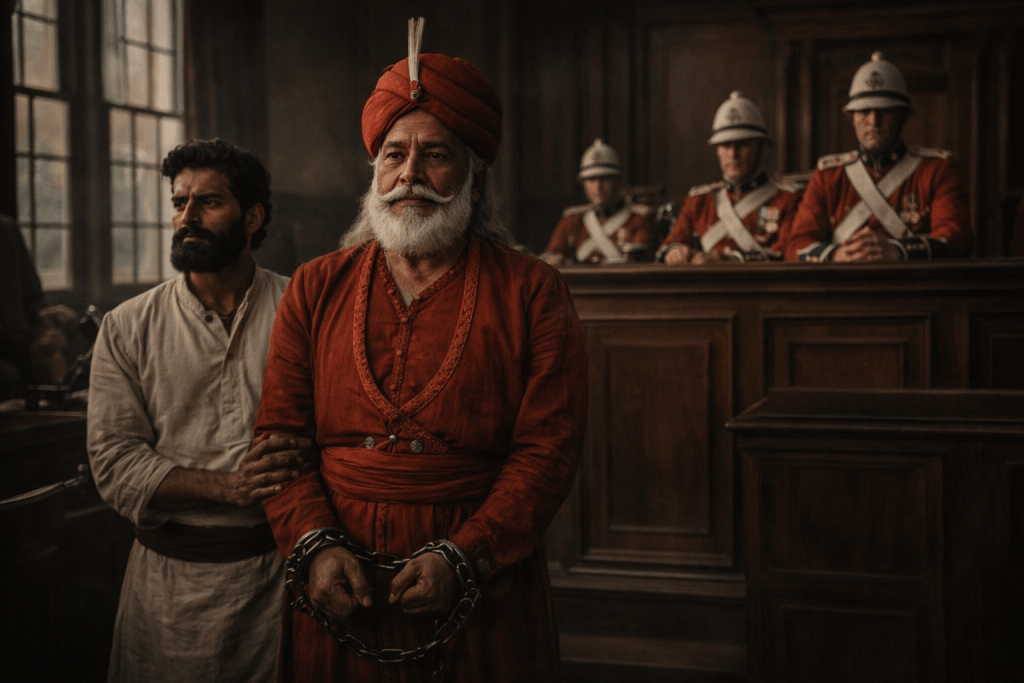
Raja Shankar Shah and Raghunath Shah were accused of inciting rebellion against British rule during the Revolt of 1857. The colonial government charged them with conspiracy and sedition.
2. Unjust Trial
The trial in Jabalpur was brief and biased, offering little chance for defense. The verdict was predetermined, aimed at crushing resistance in Central India.
3. Colonial Inquiry
British officials interrogated Raja Shankar Shah and his son under strict surveillance, seeking proof of rebellion and influence over local soldiers.
4. No Fair Defense
The proceedings allowed no proper legal representation, reflecting the harsh emergency measures of the British regime during 1857.
5. Fear of Revolt
The British feared the spread of revolt in Central India. The trial was meant to intimidate and prevent further uprisings.
Execution at Jabalpur
The Last Stand of Raja Shankar Shah
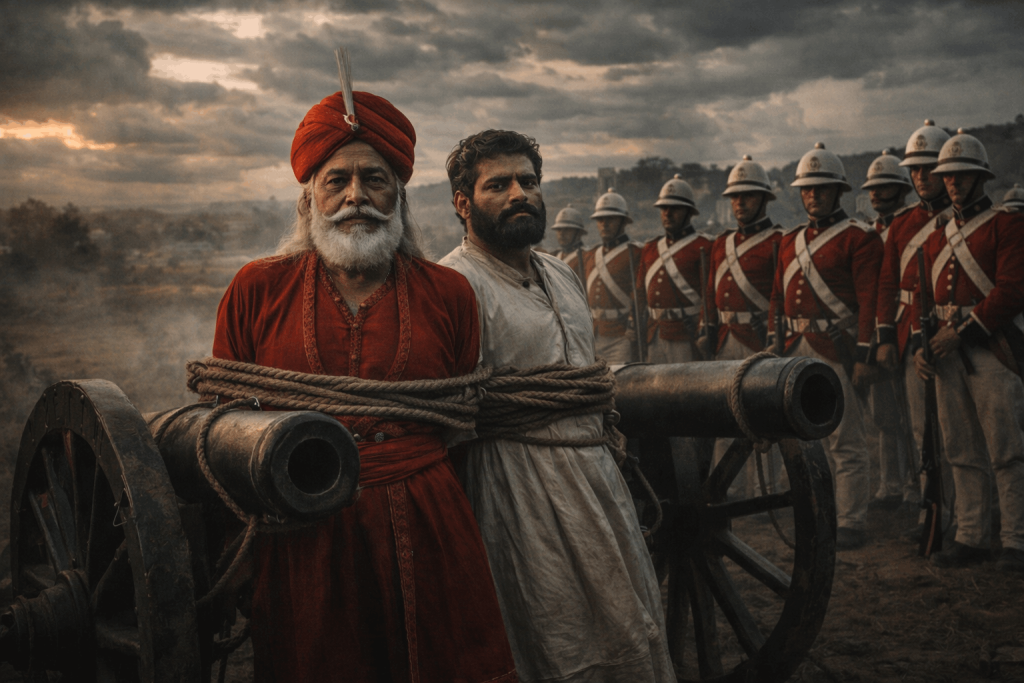
In the tense aftermath of the 1857 uprising, Raja Shankar Shah and his son Raghunath Shah were sentenced to death by British authorities in Jabalpur. Determined to crush any spark of rebellion in Central India, the colonial administration chose a brutal and highly public method of execution. On 18 September 1857, both were tied to the mouths of cannons and blown apart — a punishment intended not only to end their lives but to terrorize the local population. The execution was carried out publicly to send a strong warning against resistance to British rule. Instead of silencing the spirit of revolt, their martyrdom deeply moved the people of the region. Raja Shankar Shah and Raghunath Shah came to be remembered as brave martyrs of the Revolt of 1857, symbols of sacrifice, dignity, and unwavering courage in the face of oppression.
Public Reaction & Impact
Shock & Grief
The brutal execution of Raja Shankar Shah and his son deeply shocked the people of Jabalpur.
Rising Resistance
Instead of silencing rebellion, their martyrdom strengthened anti-British sentiment and inspired.
Voices of Protest
Whispers of outrage spread through villages, as people condemned the harsh British action.
Symbol of Defiance
Their sacrifice became a rallying point, strengthening unity communities and freedom fighters.
Martyrs Remembered
Over time, Raja Shankar Shah and Raghunath Shah were honored courage inspired.
Enduring Legacy
They came to be remembered as martyrs of 1857 — symbols of courage, sacrifice, and tribal pride.