
Role in the Revolt of 1857
Explore the life, leadership, and sacrifice of Rajashankar Shah, the courageous Gond ruler of Jabalpur who stood against British rule during the Revolt of 1857 and became a lasting symbol of tribal pride and resistance.
- Home
- Role in the Revolt of 1857
Association with Tribal Leaders
🌿
Tribal Ruler
Raja Shankar Shah was widely respected among the Gond and neighboring.
🤝
Strong Alliances
He maintained close ties with local tribal chiefs to protect regional autonomy.
🔥
Collective Resistance
His leadership encouraged unity among tribal groups during the Revolt of 1857.
🏹
Cultural Solidarity
He strengthened tribal identity and pride in the face of colonial pressure.
Association with Tribal Leaders
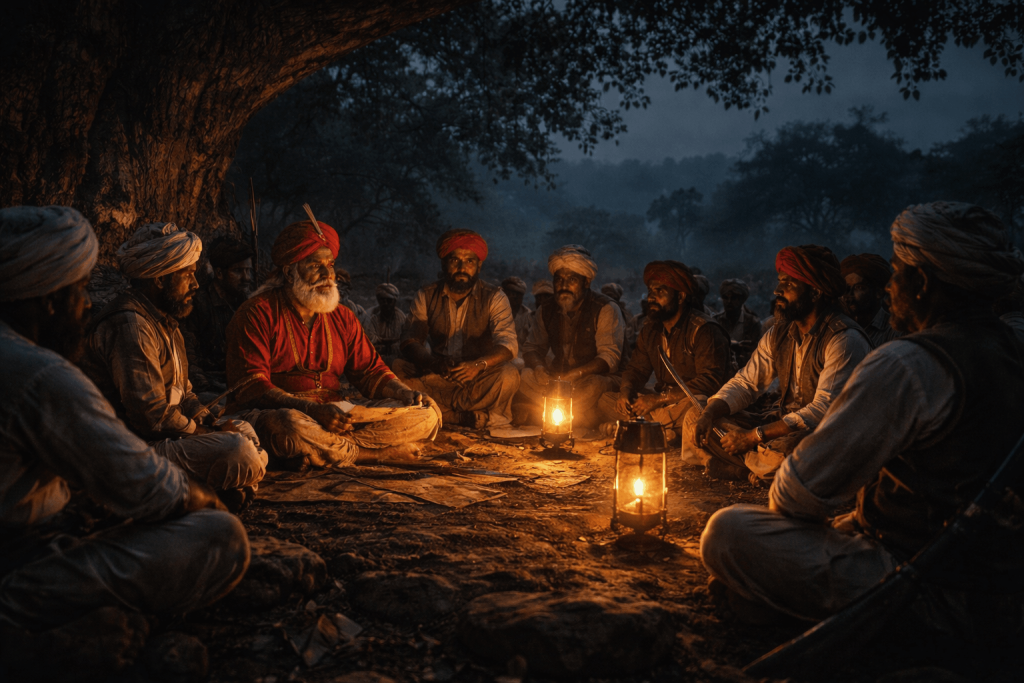
Secret Strategy Meetings
Raja Shankar Shah held confidential gatherings with trusted tribal leaders and sepoys, carefully planning resistance.
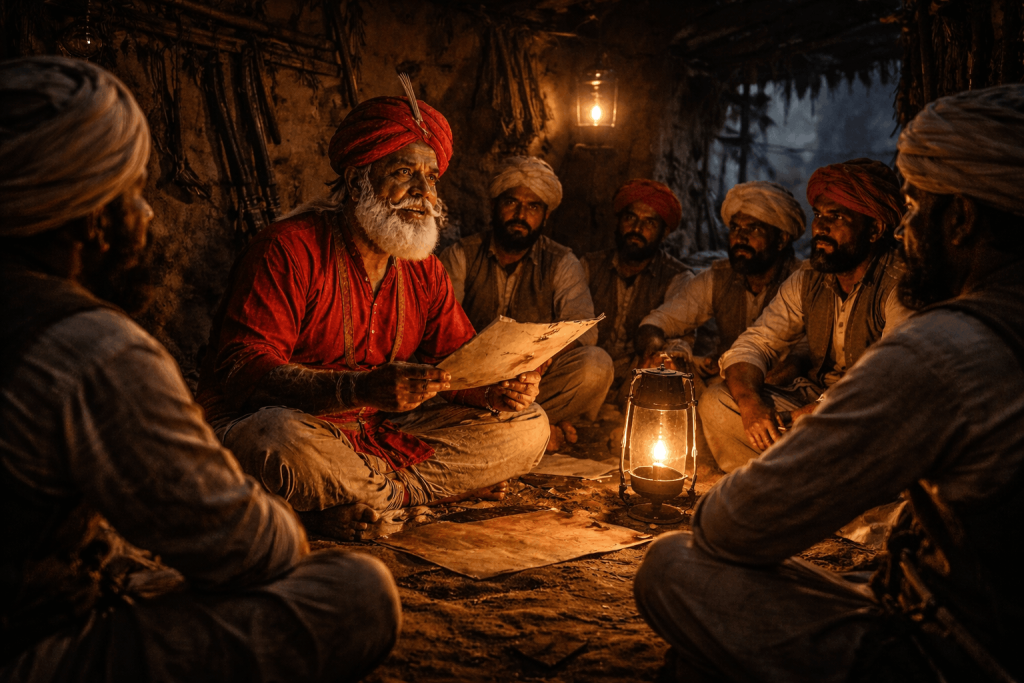
Inspiring Revolution Spirit
Through patriotic verses and hidden coordination, he quietly encouraged unity and prepared the region for uprising.
Support to Revolutionary Forces
During the Revolt of 1857, Raja Shankar Shah emerged as a quiet yet influential supporter of revolutionary forces in Central India. Though he ruled under the watchful eyes of the British administration in Jabalpur, he maintained close contact with tribal leaders, local chiefs, and discontented sepoys who were preparing to rise against colonial authority. Understanding the growing unrest among Indian soldiers, he encouraged unity between tribal warriors and sepoy regiments. Through secret discussions and strategic planning, he helped create an environment where resistance could take shape. His court became an important center of moral encouragement, where ideas of freedom, dignity, and self-rule were openly discussed among trusted followers. One of his most powerful contributions was his use of patriotic poetry. Through emotionally charged verses, he inspired courage and strengthened the determination of those willing to fight. These words spread quietly among soldiers and villagers, building momentum for rebellion in and around Jabalpur. Raja Shankar Shah’s support was not limited to symbolic gestures. He actively worked to build alliances and foster solidarity among regional leaders who opposed British interference. His efforts reflected a broader vision — to protect tribal autonomy, preserve cultural identity, and resist the expanding control of colonial rule.
British Surveillance & Crackdown
As unrest spread across North and Central India during the Revolt of 1857, the British administration intensified its surveillance over regional rulers and suspected sympathizers. Raja Shankar Shah, known for his growing influence among tribal communities and sepoys in Jabalpur, soon came under close observation. Colonial officers deployed informers and spies to monitor meetings, movements, and communications within his court. Any sign of coordination with rebel soldiers was treated as a direct threat to British authority. Reports of patriotic poetry and secret gatherings further alarmed the administration, reinforcing their suspicions of organized resistance.
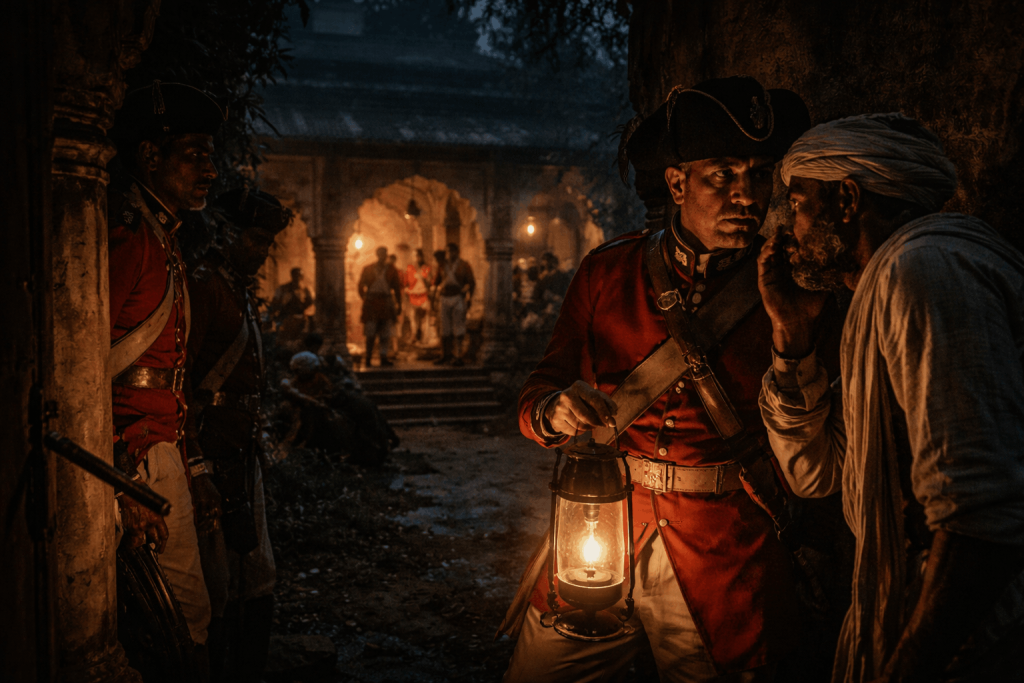
Fearing the spread of rebellion in Central India, the British moved swiftly to prevent any uprising before it could fully erupt. Raids, interrogations, and arrests became common tools of suppression. The crackdown was not limited to leaders alone — local supporters and suspected sympathizers were also subjected to questioning and intimidation. This atmosphere of constant surveillance created tension across the region. Yet, despite mounting pressure, Raja Shankar Shah continued to inspire resistance until betrayal ultimately led to his capture. The British crackdown marked a decisive attempt to silence revolutionary activity in Jabalpur, setting the stage for his trial and execution.